
As the saying goes, "Food is medicine, and medicine is food," eating foods in moderation is beneficial for the body. However, if you consume more than what your body actually needs, even foods that are considered healthy can turn into harmful foods.
What this article aims to present is a list of foods that, despite being healthy, should not be eaten in excess.
Carrots

Carrots contain Beta-Carotene, and when you eat carrots, your body converts this compound into Vitamin A. There's no such thing as having too much Vitamin A in the body, because your body only converts the amount of Beta-Carotene needed to meet its Vitamin A requirements. Once it gets the Vitamin A it needs, the conversion process stops.
However, this means that excess Beta-Carotene will build up in your body. In that case, you may experience a condition called Carotenemia, where the skin turns a yellowish color. This condition is not life-threatening.
Drinking too much water

If you drink more water than your body needs, water can accumulate in the brain, causing the brain to swell. Since the skull does not have the ability to expand and contract, you will feel as though your entire head is under tight pressure. This condition is commonly experienced by athletes.
Eating too much avocado
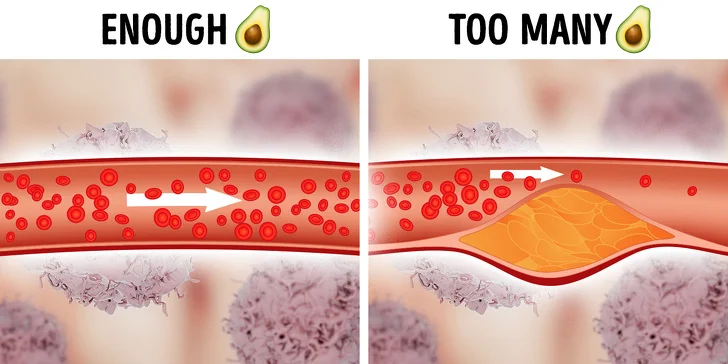
Avocados are rich in fiber and vitamins, which help remove bad cholesterol known as LDL as well as excess fat. One avocado contains 240 calories, which is roughly the amount of calories a person needs for the whole day. However, if you need to burn off a larger amount of calories, you may end up suffering from clogged arteries. Therefore, if you're going to eat avocado, you shouldn't eat more than one per day.
Seaweed
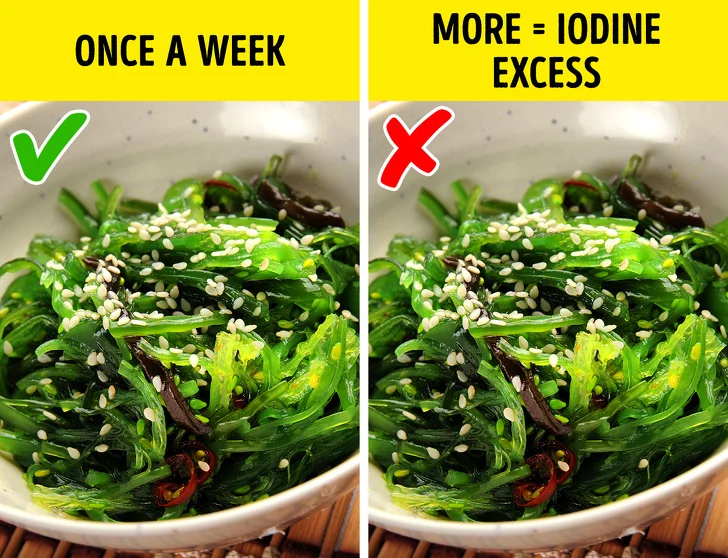
Seaweed is rich in Vitamin B12 and serves as a vegetable that vegetarians can use as a meat substitute. Because it's also rich in iodine and fiber, it helps with weight loss. However, if the iodine amount becomes excessive, it can lead to thyroid nodules and may even cause weight gain.
Soy milk and soy milk products
Soy milk is high in Vitamin B, fiber, potassium, magnesium, and protein, which is why it can even be called a superfood. However, if you have thyroid nodules, you should avoid soy milk and related soy products.
Source : Brightside.me